2018年8月23日星期四

Important Registration Regulations for Exporting Health Care Products to Vietnam

"/

With the continuous improvement of living standards in recent years, the Vietnamese people’s demands for healthcare products have increased significantly. Compared with others, Vietnamese acceptance of healthcare products is later than most other countries. It was only in the 1990s that healthcare products, mainly imported from the United States, gradually entered the Vietnamese market. Later healthcare products from China, South Korea, Belgium and a number of other countries also started entering the Vietnamese market. Due to the small scale of domestic production and relatively limited varieties, the sales of healthcare products in Vietnam are still mainly dependent on imports.

According to statistics, there are approximately 1,800 companies that produce and sell health products in Vietnam with a total of 10,000 varieties. What kind of issues do foreign companies need to pay attention to when trying to enter the Vietnamese market? Today, Ddu will give you a brief introduction on how to cross the first threshold from the perspective of registration in regards to exporting products to Vietnam.

In Vietnam, functional foods (TPCN, Thựcphẩmchứcnăng) are used to support (restore, maintain or enhance) the function of human organs, with (or without) nutritional effects, these foods (or products) can make our bodies comfortable, enhance the capacity of resistance and reduce the risk of contracting diseases. According to their purpose, the content of trace elements and the method of ingestion, functional foods are also divided into trace element supplements, food supplements, health products and nutritional products.

If you want to export functional foods to Vietnam, the first step is to register with the Food Safety Department (Cục An toàn thực phẩm) under the jurisdiction of the Ministry of Health of Vietnam to obtain a “passport” for selling in Vietnam. The valid duration for a registration certificate is 3 years.
According to the Vietnamese Decree 38/2012/ND-CP, registration requires the submission of the following documents:
1. Detailed product information (requires the signature and official seal of the person in charge of the manufacturer);
2. A free sales certificate issued by the competent authority of the country of origin or other equivalent documents to prove that the product complies with local regulations (subject to embassy accreditation);
3. Inspection report issued by the national competent authority, an independent Vietnamese laboratory (original or notarized copy) or a local laboratory of the original country (original or copy certified by the embassy) approved by the competent national authority within the last 12 months, the test report should cover the main quality and safety indicators;
4. Internal self-inspection plans and reports from the enterprise;
5. Labels language used in the country of origin and labels in Vietnamese;
6. Product samples;
7. A business license containing the scope of food business;
8. Certificates to prove that the production facility meets the food safety requirements;
9. Certificate of HACCP or ISO 22000 or equivalent (notarized copy).

Here are 2 recommended practical websites regarding the exporting of healthcare products to Vietnam.
1. Ministry of Health of Vietnam: http://www.moh.gov.vn/
The official website of the Ministry of Health of Vietnam where you can check the latest official policies.
2. Vietnam Functional Food Association: http://www.vads.org.vn/
The website has a lot of market conditions related to Vietnamese health products.
from Drugdu  https://goo.gl/QgQoHk

2018年8月21日星期二

Drugdu Medical Dressing Market Analysis Report

What’s the import and export situation of medical dressing in China?
And what are the prospects of this industry?
Today, pharmaceutical and medical devices online platform, Ddu, brings you the breakdown with ourMedical Dressing Market Analysis Report.
As one of the most critical medical products, medical dressing plays a significant role in the import and export trade of China.
Common cotton (including absorbent cotton, gauze and bandage etc.) currently holds the dominant position in the Chinese medical dressing market. These products, made of natural materials, make up over 50% of the market.
Product homogenization, low value-added and insufficient technologies are the basic industry problems. Export companies mainly rely on OEM exports in short of their own brands and sales channels in the international market.
In 2013, the number of countries China exported medical dressing to, totaled at 195, among which North America, Europe and Asia were the main export markets and their export sales were an estimated 8.03 trillion USD, 7.82 trillion USD and 4.62 trillion USD respectively.
In regards to the countries and regions, the top ten export markets were the United States, Germany, Japan, Britain, France, the Netherlands, Italy, Belgium, Venezuela and Australia whose combined export volume totaled 1.639 billion USD, accounting for 68.86% of all exports.
Due to the current saturated trends and fierce competition in European and American markets, medical dressing export companies are now focusing on the developing nations. The year 2013 witnessed a dramatic increase in the markets of emerging nations like Latin America.
Regarding these companies, 51 had exports that totaled at over 10 million USD. Among this 51, 19 companies had exports that totaled an estimated 20 million USD.

The Prospects of medical dressings
According to experts at Ddu, a cross-border medical trade platform, with the increasing demand for multi-functional, new materials and high value-added medical dressing, they predict that the domestic medical dressing production structure will gradually develop towards high-end products.
Innovation of medical dressing products is mainly reflected in the innovation of the product material manufacturing process. However, medical dressing products with technology content accounts for less than 10% of the Chinese export market. Also, consider the fact that the development of new products and investment in research is far lower in China than in developed counties.
Thus, adjusting business strategies, cultivating original brands and increased investment in research and development of high-end new medical dressings products will be some of the common challenges for medical dressing export companies in China.
Revitalization, development, standardization, and progress of the Chinese medical dressing industry will be our shared expectation and mission.

from Drugdu  https://goo.gl/QgQoHk

2018年8月19日星期日

3 Ways in which Healthcare & Pharma are Changing Marketing Strats

In 2010, around 130 brands like Zoloft and Lipitor constituted for 34% of the universal pharma sector sales. Following the same year, many other drug companies hewed from the permit. The sector has changed in countless ways. Below are a few ways pharma and healthcare companies have moved their strategies.
The end of TV ads
Since 2012, there has been a 62% increase on TV ads spent in the pharma sector. For healthcare promoters and in other similar categories, linear TV has always been the most productive mass marketing channel. However, TV ads aren’t personalized and this trend is unlikely to last. In 2017, pharma promoters will have spent over $2.2 billion on digital advertising, up from $1.4 billion in 2014. Digital is a better locus than TV for marketing drugs to smaller segments as it offers much more contact-point data to advertisers and more personalization.
Push or Pull?
Previously pharma companies focused on a large group of people with the same general health issue, like heart diseases or high blood pressure. But, now that promoters have shifted their focus to developing and marketing new drugs for smaller segments, brands have started to grip strategies which are targeted and individually tailored. According to Google research, McKinsey & Co., and the Wharton School of the University of Pennsylvania, 59% of consumers expect the same one-to-one experience from health providers that they get from businesses such as Amazon.
Niches Market is King
More and more brand campaigns are focused on condition-specific, which is changing the types of media inventory being utilized. Medical brands are focusing less on mass-market websites as these sites are basically the online equivalent to TV. Marketers are becoming more interested in looking out for inventory and publishers focused on specific audiences.
Finding your specific audience, the ‘longtail’, is becoming much more relevant and a much better road to success.
from Drugdu  https://goo.gl/QgQoHk
By Ddu

China’s Import and Export Market Report of Rheumatoid Arthritis Drugs

Rheumatoid arthritis (RA) is an autoimmune disease with complex pathogenesis and an extremely high morbidity rate, which seriously affects the quality of the life of patients and brings economic burden to society. Thus, effective treatments of RA has become a global concern of the pharmaceutical industry.
The purpose of RA treatment is to relieve pain, reduce inflammation, protect joint structure, maintain function and control the human body system. At present, the therapeutic drugs for RA mainly include non-steroidal and anti-inflammatory drugs, disease-modifying anti-rheumatic drugs, hormones, biological agents and others.
  1. General situation of global market of RA drugs
According to a report of Evaluate Pharma, sales of global RA drugs reached 53.3 billion USD in 2016, an increase of nearly 4.5 billion USD compared with 48.8 billion USD in 2015.
It is estimated that by 2022, global sales of RA drugs will reach 54.5 billion USD.
Source: Evaluate Pharma
At present, the total number of patients in the global RA drug market (USA, Japan, the European Union, the United Kingdom, Italy, France, Spain, China, and India) has exceeded 7 million, and it is expected to exceed 8.5 million in 2023. Additionally, as the world's largest market for RA treatment, the United States is expected to maintain its leading position by 2023.
Humira, the best-selling drug from Abbvie in the global RA drug market, accounts for 30% of the top 10 RA drugs.
According to statistics of Evaluate Pharma, the top 10 global companies in sales of RA drugs in 2016 were as follows:

Source: Evaluate Pharma
According to the statistics of PhRMA (Pharmaceutical Research and Manufacturers of America), there are currently 74 RA drugs in the process of clinical research around the world, of which 19 are in phase III and 4 of them have been submitted to the FDA for new drug application, which indicates that the global RA drug market is increasingly fierce.

Source: PhRMA
  1. China’s market of RA drugs
With the advent of an aging society and influences such as obesity, diabetes epidemic diseases and environmental factors, the number of RA patients in China has increased year by year, which has lead to the development of the RA drug market. From 2013 to 2016, the scale of China's RA drug market has been steadily expanding, and in 2016, it exceeded over 60 billion RMB, showing greater market potential in the future.

China's research on RA started relatively late with rapid progress and is further promoted by the refinement and standardization of medical application in the Chinese market. 
Out of the top 10 brands of RA drugs in China in 2016, there are 7 domestic companies, showing strong competitiveness.

Source:PDB
Moreover, biologic agents have been successfully used to treat RA, which means that now biomacromolecular drugs are available for RA treatment.
With the development of the Recombinant Human TNF Receptor-IgG Fusion Protein for Injection, biological agents have become widely applied in the RA drug market, further increasing its market share.
According to the statistics of PDB in 2016, products of biologic agents took up the highest market share, reaching 23.1%.
Several types of biological agents have been approved in the market for RA treatment and have proven their efficacy. The use of biological agents in RA is as follows:

In addition, there are many domestic products that are in clinical trials.


  1. China’s import market of RA drugs
In terms of the domestic market, RA drugs with technical content are imported to meet the domestic demand.
According to the statistics of China customs, the main imported RA drugs in 2016 were Humria, Enbrel and Flurbiprofen.

Since Humria was approved to be imported in 2010, its total imports reached 0.19 billion RMB in 2016. Enbrel was on the market earlier abroad and was given the approval of import almost simultaneously with Humria. However, in 2016, the total imports of Humria reached 0.2 billion RMB, which was slightly better than that of Humria.
Flurbiprofen is an excellent variety of non-steroidal anti-inflammatory drugs with a strong effect by using a small therapeutic dose. In 2016, the demand for flurbiprofen in China reached 640 million Yuan, a year-on-year increase of 28.88% compared with that in 2015, of which 83.59% was occupied by Flurbiprofen Axetil Injection from Beijing Tied Pharma and Flurbiprofen Axetil Injection from Mikasa Seiyaku took up the rest 16.41% with imports of 105 million Yuan.
  1. China’s export market of RA drugs
Biologic agents have been successfully used to treat RA, which means that now biomacromolecular drugs are available for RA treatment.
TNF-α antagonists are currently the most widely used biological agents. And Recombinant Human TNF Receptor-IgG Fusion Protein, developed in China, has taken a certain share of the market such as Recombinant Human TNF Receptor-IgG Fusion Protein for Injection from Zhejiang Hisun Pharmaceutical Co., Ltd.
Zhejiang Hisun Pharmaceutical Co., Ltd.
One of the top 100 industrial enterprises with comprehensive strength in China's chemical and pharmaceutical industry.
Representative drugs: Recombinant Human TNF Receptor-IgG Fusion Protein for Injection
Indications: Rheumatoid spondylitis, ankylosing spondylitis and psoriasi
Main exporting countries: over 70 countries and regions around the world like Japan, UAS and UN etc.
In addition to biological agents, China's Flurbiprofen Axetil Injection and Iguratimod Tablets also sell well. Representative companies are Beijing Tide Pharma and Simcere.
1)Beijign Tide Pharmaceutical Co., Ltd
China's first high-tech pharmaceutical company that develops, produces, and sells a series of targeted drugs.
Representative drug: Flurbiprofen Axetil Injection
Indication: postoperative and cancer analgesia
Main exporting regions: over 70 countries and regions around the world like Europe, America and Asia.
2) Simcere Pharmaceutical Group
One of China's top 100 pharmaceutical companies.
Representative drug: Iguratimod Tablets
Indication: active rheumatoid arthritis
Main exporting regions: Europe

  1. Biological agents are popular
Western medicines are no longer permanent solutions to treat chronic disease like RA due to side effects to the liver and kidneys. 
Biologics, as the currently advanced technology in RA treatment, has a rapid onset of action, a strong curative effect, and less adverse reactions and significantly improve the condition as well as inhibiting bone destruction, which is preferred by the international market.
With the continuous development of science, efforts of R&D personnel, and the constant disclosure of the causes of RA, RA biosimilar drugs will flood into the market in large quantities. Before the market for RA treatment becomes saturated, discovering drugs with novel mechanisms as soon as possible will become key for Chinese pharmaceutical enterprises to enter the international market.
from Drugdu  https://goo.gl/QgQoHk

Operating Room Equipment Market Holds Immense Potential

Operation rooms need to be equipped with advanced instruments if we see the number range of surgical procedures handled on a daily basis across the world. This ensures better handling by surgeons and other staff, more flexibility, greater operational efficiency, and better results.

Creation of hybrid operating rooms is the new swing in the operating room equipment market, wherein surgical and non-surgical functions are being carried out.  
The operating room equipment market is categorized into Europe, North America, Asia Pacific, etc. Operating room equipment has a thriving market in North America and Europe. These countries also offer great potential for revenue generation. These regions also assume importance in view of the fact that there is a strong demand for constant upgrading of operating room equipment.
In 2017, the movable imaging systems segment generated revenue of US$8,384.9 million and held a solid position in the operating room equipment segment.
Biomedical systems, such as electrical surgical units, patient warmers, patient monitoring systems, suction systems, pumps surgical tourniquets, and others, is the second most lucrative product segment in the operating room devices market.
In 2017, this segment generated revenue of US$7,785.1 million.
from Drugdu  https://goo.gl/QgQoHk

Rise in China’s Global Pharma Market up to $175 billion by 2022 – Market Prediction

Though the US stands first in the race in terms of sales and growth, it is highly believed that China would reach the peak in the pharma market by 2022. At present, since there has been a decrease in public health funding, there has been a slight fall in pharmerging countries like Brazil, Russia, India and China (BRIC). But it is believed that the condition of these pharmerging countries will improve in the next five years [1].
Spending on medicines in pharmerging countries in 2022 (in billion US dollars) [2]
Market Scope predicted that China’s ophthalmic market would reach $4.0 billion from $2.7 billion in 2022 [3].  Though the economy of China was initially quite slow, the country has increased access to medical care with more government spending on health and a rising supplemental health insurance markets. For the last two years, China has implemented many reforms to improve the quality of healthcare by regulating medical devices and pharmaceuticals, speeding up the approval of new products and developing diagnostic equipment and manufacturing of medical technology. Since there was a huge gap from the government side, the access of entrepreneurs and private businesses got increased to fill the gap. The right combination of need, rising income, and growing opportunities for private initiatives would help China to reach the peak in the world’s largest ophthalmic market. (These estimates do not include the market for traditional Chinese medicines). It was also noted that China was one of the first of its kind in implementing mobile diagnostic technologies and telemedicine. Several efforts were going on to improve the diagnostic capabilities in rural areas and linking them to the specialists in urban hospitals via telemedicine.
For the time being, the Chinese pharmaceuticals market was highly fragmented where the top 50 domestic companies such as Guangzhou Pharmaceutical Holdings, Shanghai Pharmaceuticals Holding, Yunnan Baiyao, Kangmei Pharmaceutical, Harbin Pharmaceuticals, Xiuzheng Pharmaceutical Group, Sinopharm, Bayer, Pfizer, AstraZeneca, Roche, Sanofi, Novo Nordisk, Merck & Co., Johnson & Johnson, Novartis, GlaxoSmithKline, accounts for only one-fifth of the market. But still, there were significant opportunities for multi-national companies to expand their reach and presence in China.

The lead analyst of the Visiongain report saidThe Chinese pharmaceutical market is largely driven by sales of generic, domestically produced drugs. It is no surprise that the only two of the top ten pharmaceutical companies by value are multinational firms relying on reduced sales volume on high margin. In total, the top ten companies in the Chinese pharmaceutical market generated 18.0% of the total market revenues. This figure is far below the market share for the top ten firms in the developed US and European markets. Recent consolidation within the industry has been driven by stricter good manufacturing practice regulations pushing smaller firms out of business. Visiongain anticipates further consolidation within domestic manufacturers over the next ten years, along with a greater prominence for multinational with innovative treatments.” [4]

It is a well-known fact that China will be an ever-increasing important component for drug development. It was reported in CNBC that China’s 2017 pharmaceutical market had reached $122.6 billion, as per the data from IQVIA (formerly QuintilesIMS). China’s pharmaceutical market was expected to grow to between $145 billion and $175 billion by 2022. Last year Lan Huang, the chief executive officer of BeyondSpring, stated that China has got innumerable opportunities in health and biotech sector. The health companies will surely make use of its clinical resources to reduce costs and time in drug development. A key area of development apart from ophthalmology would be oncology development. Since China is thickly populated, around 700,000 new cases of cancer are diagnosed in China every year. The high number of cancer patients is directly correlated with a higher percentage of patients who enter clinical trials. [5]

For instance, in respect to the development of CAR-T therapies, China is seeing exponential growth. There are currently 116 clinical CAR-T trials registered in China. But only 96 trials were registered in the United States. In 2016 Juno Therapeutics (now part of Gilead Sciences) combined forces with Shanghai-based WuXi AppTec to form a new Chinese company called JW Biotechnology Co., Ltd. Here, cancer treatments involve Juno’s chimeric antigen receptor (CAR) and T cell receptor (TCR) technologies in combination with WuXi AppTec's R&D and manufacturing platform. [5]

Over the past few years, one more change has been noticed in China. The drug restrictions were relaxed so that the western companies were able to have a tie up for further drug development. Previously, drug companies had to wait for a long time to gain approval in other countries before starting clinical trials in China. But now the growing demand for newer drugs has opened the doors to new opportunities. Chinese pharma companies are making their notable presence in the West. CNBC reported that in 2016, Chinese pharma companies had gained approval from the U.S. Food and Drug Administration for 38 generic drugs, with a marked rise from 22 in 2015. [5]
In the first quarter of 2017, around $125.5 million was invested by Chinese venture capitalists. But in 2018, more than $1.4 billion was spent by Chinese investors into U.S. biotech firms, which led to approximately 40 percent hike of overall funds. That’s how during recent times, China has become the second-largest drug market in the world. Until 2012, Japan remained in the second position after the United States. The overall value of Japan’s healthcare market was $84.8 billion in 2017. Now since China has taken the second position, one could expect competitive growth in Japan also. There would also be an increase in its biopharmaceutical workforce over the next few years due to joint programs between academic institutions and the pharma industry. For example, the association between Paraxel International and Meiji Pharmaceutical University, a private college in Japan, in order to train the people in varied industrial roles. [5]

By looking at the tremendous opportunities in China, it is crystal clear that China is in the race and should achieve the target of $175 billion by 2022. There would also be a fair chance of topping the list of the largest drug market in the world.


References

from Drugdu  https://goo.gl/QgQoHk

Drugdu.com to Attend CPhI in Shanghai Sharing Insights on International Marketing of the Medical Trade

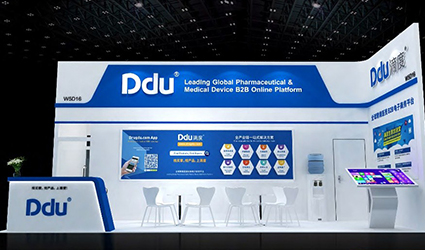
Ddu is to attend CPhI China 2018 which will be grandly held at the Shanghai New Int'l Expo Centre (SNIEC), Shanghai, China. As the leading global pharmaceutical & medical device B2B online platform, Ddu has been an exhibitor at CPhI in Shanghai for three consecutive years. If you are attending this exhibition, feel free to visit our booth at W5D16.
As China's leading event for the pharmaceutical industry, CPhI China strives to provide a platform for local, regional and international buyers, manufacturers and suppliers to meet, do business and drive research and development in the Chinese pharmaceutical and healthcare industries.
As the largest pharmaceutical exhibition in Asia, Shanghai CPhI exhibits raw materials, intermediates and fine chemicals, excipients and dosage forms, natural extracts, biological products, pharmaceutical preparations and animal health care. After years of efforts, CPhI Shanghai, which has been successfully held for 17 sessions, has become the best choice for local pharmaceutical companies to open up their international markets. In 2018, the number of exhibitors is expected to reach 3,000 and the estimated visitors is 85,000.
Ddu Booth Blueprint
For the past three years, Ddu has attended CPhI in Shanghai and showcased their new “Internet + cross-border medical trade” marketing model, attracting numerous visitors to their booth for consultation. Ddu, undoubtedly, will go out of their way to boost business deals for buyers and suppliers on site through their innovative fast matching system and help users on the platform to promote their products and brands by matching souring requests and agency requirements at the exhibition.
According to the management of Ddu, CPhI Shanghai is the largest global pharmaceutical exhibition and they would like to take the opportunity to help their users explore international markets of the medical trade.
After a user fills in the product name and target area at the booth, the system will quickly match the appropriate suppliers based on the keyword. At the same time, Ddu staff will also give priority to recommending users on the platform according to the clients' needs at the site.

A symposium for the Ddu Trade Accelerator will also be held to share insight on the company’s new methods for taking advantage of online promotions to open up international markets and accelerate cross-border trade.
Following the symposium held on March 15th in Shenzhen and the one on April 13th during CMEF in Shanghai, this is the third time that Ddu will hold a symposium. The first two symposia were well received and many clients took the floor and shared their stories on their experience of the cross-board medical trade, showing confidence in Ddu.
The Ddu Trade Accelerator is a one-stop online promotion service specially tailored for the cross-border medical trade. So far, it has assisted over 100 medical device companies in obtaining new orders from 36 countries and regions, attracting the attention of over 400,000 medical professionals.
About Ddu
Ddu (www.drugdu.com) is a leading global B2B online platform focused on the cross-border trade of pharmaceuticals and medical devices. As a pioneer in the industry, Ddu is committed to accelerating the circulation of the pharmaceutical and medical device trade around the world, making it simpler and more efficient. With advanced technology and expertise in the international medical trade industry, Ddu has provided a full range of solutions for thousands of global suppliers and buyers to build and develop channels of communication and expand international business opportunities.
from Drugdu  https://goo.gl/QgQoHk

Indian Medical Devices Market – An Overview

With 1,00,000 laboratories and a vast number of hospitals constituting a bulk of the Indian IVD industry, India broadly accounts for one percent of the global diagnostic industry, hardly a fact to be proud of. By 2022, the Indian IVD industry is anticipated to show an exponential growth of 20 percent and clock figures of USD 32 billion by augmenting infrastructural strengths and rolling out key policy initiatives to fast-pace production efforts and derive quick results. The Indian medical diagnostics industry chiefly comprises of In-vitro diagnostics (IVD) and in-vivo diagnostics which are witnessing tremendous growth and changing the paradigms of the business. The growth in key market segments like biochemistry, immunoassays, hematology, reagents, molecular diagnostics, and microbiology or tissue diagnostics is likely to position the Indian medical diagnostics market in the 15-20 percent growth rate range in the near term and earn revenues of around USD 1.7 billion
The IVD sector in the country is chiefly characterized by 70 percent laboratories offering pathology services and 30 percent entities doling out radiology and imaging services. Though domestic players are flexing their muscles and are gearing to provide new-age diagnostic services with path-breaking innovations and strategic investments, multinational companies continue to hold sway over 60% of the domestic IVD market which is expected to grow by leaps and bounds in coming times.
An investor-friendly policy initiative and market-friendly environment to foster sector growth is the immediate need of the hour. The domestic industry is in need of product innovations and adherence to global service delivery standards to give it a sharp edge in a global competitive milieu. Clear cut regulations to ensure operational transparency and strict quality control with periodical checks, improved infrastructure for new-age manufacturing capacities, incentivizing producers through initiatives like tax breaks, building research and development capabilities to audit equipment performances are key pathways to boost the competencies of the Indian medical devices industry.
A rise in healthcare costs, a population becoming sensitized and aware of new-age healthcare products and facility and the escalation of minimally invasive and non-invasive diagnostic practices in determining treatment accuracies have come up as a main reason for the growth of the medical devices industry in India. Hospital laboratories are demanding advanced IVD products which facilitate expansive emergency services and testing innovations to drive the competencies of post-surgical testing. With lifestyle diseases like diabetes on the rise, home healthcare has also emerged as a core consumer of IVD products. The demand for high-end testing capabilities and innovative diagnostic procedures has also made independent clinical laboratories frontline customers of products coming from IVD product manufacturing companies.  
The demand for molecular diagnostic products is likely to witness an upswing with awareness rising among the medical fraternity for the need of accurate screening methodologies and the diagnosis of tumors and complex genetic disorders which are speedily on the rise. The expansive need for point of care (POC) diagnostic technologies has been triggered by urban lifestyles which are a mixture of sedentary habits, chronic diseases which are emerging as dangerous health patterns, poor dietary choices in the form of junk food and the unhindered aping of unhealthy habits seeping into our daily routines. The Indian healthcare market has been growing aggressively as the molecular diagnostics markets witnesses and marked growth and POC products playing a key role in the first line of effective diagnosis.
The increasing choice of point-of-care and the mount in use of diabetes self-monitoring devices will largely drive the market fortunes of home IVD products. Rising important on detection of infectious diseases and therapeutic drug monitoring, cancer testing and cardiovascular diagnosis will pave the path for specifically tailored immunoassay solutions. Speedily increasing cases of ovarian and breast cancer will trigger the demand for particularly outlined cellular analysis reagents and instruments. 
Operational constraints and policy bottlenecks continue to spoil the efficacies of the Indian IVD sector, which continues to display nascent characteristics. Qualified manpower and trained personnel are in alarming paucity in the country at a time when there is a dire needed to roll out innovatively developed histological and molecular tests.  The country faces a startling paucity of trained workforce equipped to operate a host of advanced histological and molecular tests. With a view to approach the technological competence of laboratory resources, new automation tools have been launched, to obliterate human error in critical diagnostic procedure and higher precision levels. Automation is rising as a pivot along which sample analysis and testing will be handled in histology, microbiology, hematology and blood banks. Widen aims for automation will lead to reinforcement in the sector with the setting up of huge amplitude laboratories will enable large-scale testing procedures.  Analytical procedure across the diagnostic range comprising diabetes, infectious diseases and HPV will be increasingly automated. 
There is a robust need to create a sustained technology policy framework through propelling of innovation and allocation of resources for fast-pacing the development of the IVD sector. The advanced diagnosis technology model needs to be planned which will ensure that advance healthcare is available to the population. A quality system check and balances need to be instituted for regulating the quality of diagnostic exam with the setup of a strong regulator. The government also needs to incentivize public-private partnership to encourage R&D in the IVD sector and fund the setting up of IVD start-ups which can expedite product innovation.
Find the below statistic and healthcare market details on India, specific details on the medical device and industries.
Overview of medical device industry: The Indian medical device market has been marking steady commercial growth. Valued at approximately USD3.5 billion in 2015, it could scale the expansionary curve to record growth figures of USD 4.8 billion by 2019. India's economic, healthcare, and social landscapes evolve, its medical device industry rising as a promising opportunity for foreign manufacturers.
Opportunities in the Indian market: India mostly depends on imports to supply its healthcare system with medical technology. Demand for advanced, high-tech medical equipment and devices has been the marked apex of the medical tourism and luxury healthcare segments which are among India's fastest-growing industries. There is regular demand for surgical instruments, orthopedic and prosthetic equipment, cancer diagnostics, imaging, orthodontic and dental implants, and electro-medical equipment.
Industry challenges in India: Only certain product categories come under the purview of the medical device regulation mechanism in India. A significant business obstacle presents itself for foreign manufacturers of regulated device types in the form of an underdeveloped regulatory framework. The pressure for manufacturers competing with low-cost Chinese products is severe especially with a weak rupee making it difficult for some medical device companies to remain profitable in the market. Also, international manufacturers will also encounter significant competition from American, European, and Japanese companies.
A report by Deloitte has stated that the Indian medical devices industry is expected to record a growth rate of USD 25-30 billion by 2025.
Indian companies are expected to exhibit a more credible business outlook on the global platform with the introduction of the New Medical Devices Bill and the maturity and process driven DNA of some of the companies. 
The manufacturing space in the medical devices sector is still in extremely primary stages and Indian companies could scale the curve with a firm push from the government.  Apart from the cost, the government plans to separate manufacturing of medical devices from drugs from the regulatory perspective could lead to better transparency and a level playing field for medical devices makers. This can raise robust standards ecosystem for the industry, boost national production as well as boost exports, lead to greater foreign investment in the sector and bring in more investments into infrastructure and processes.
Similarly, technology will continue to be the core medium for disruptive innovation, wherein the capacity of the wearables and diagnostic framework to leverage technology can be the basis to provide out-of-the-box, innovative and cost-effective mass healthcare solutions.
These two model will continue to progress parallel to each other with the Medical devices Industry providing fantastic opportunities for convergence in the coming future, both for high-tech and traditional manufacturing, to create innovative solutions for both India and the world.
Emerging start-ups and new-age SMEs have been changing their product portfolios by increasingly marketing specialty surgical devices such as stents, catheters and manufacturing high-end devices and specialized equipment to cater to advanced medical disciplines like Interventional Radiology.  The “Make In India” program is expected to spur the growth of the Indian private sector and is expected to reduce demand burden on imported medical devices products.
Even though manufacturing in the past were limited to producing technology products at the low end of the product chain, the value chain is being speedily scaled by a few Indian domestic companies. These companies are leading the fortunes of the Indian medical devices industry by clinging to a lower cost model of manufacturing specialty device offering superior impact and economies of scale and having the capacity to drive sales by being globally competitive and offering superior market quality.
from Drugdu  https://goo.gl/QgQoHk